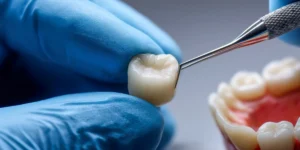

A root canal is one of the most effective ways to save a tooth that would otherwise need to be extracted. It clears the infection, eliminates the pain, and preserves the natural tooth structure. What it does not do is leave the tooth in the same condition it was before.
After a root canal, the tooth needs a crown. This is not a separate or optional treatment. It is the step that completes the restoration and determines whether the tooth survives long term. Understanding why helps patients make that decision with clarity rather than reluctance.
What a root canal actually does to a tooth
During a root canal, the pulp inside the tooth is removed. The pulp is the soft tissue at the center of the tooth that contains nerves, blood vessels, and connective tissue. It is also what keeps the tooth hydrated and supplied with the nutrients that maintain its flexibility.
Once the pulp is removed, the tooth loses that internal moisture supply. Over time it becomes more brittle than a living tooth, more prone to micro-fractures, and significantly more vulnerable to the kind of fracture that cannot be repaired. A root canal-treated tooth that is left uncrowned is not a tooth that has been saved. It is a tooth that is waiting to fail.
Why a crown is the right next step
A crown wraps the entire tooth and distributes bite forces evenly across the surface. For a tooth that has already been weakened by the decay or infection that required the root canal, and further weakened by the procedure itself, that protection is not optional. It is what allows the tooth to function under normal chewing forces without fracturing.
Research on this is consistent. Root canal-treated teeth without crowns fracture and fail at significantly higher rates than those that are crowned. The difference is most pronounced in back teeth, where bite forces are greatest, but applies to front teeth as well when structural loss has been significant.
Crowning a tooth after root canal treatment is also the appropriate time to address any cosmetic concerns. A root canal-treated tooth can darken over time due to changes inside the tooth structure. An all-ceramic crown corrects that discoloration while providing the structural protection the tooth needs.
Why patients delay and why that matters
The most common reason patients delay the crown after a root canal is that the tooth no longer hurts. The root canal resolved the pain, and without pain, the urgency disappears. This is understandable, but it reflects a misunderstanding of what the crown is for.
The crown is not about managing symptoms. It is about protecting a tooth that has lost its structural integrity. The absence of pain after a root canal is not a sign the tooth is protected. The nerve has been removed. The tooth cannot signal distress the way a living tooth can. By the time something goes wrong with an uncrowned root canal tooth, it often goes wrong suddenly and severely.
The longer the crown is delayed, the greater the risk. Temporary crowns placed after a root canal are not a long-term solution. They are designed to protect the tooth while the permanent crown is being made, not to serve as a substitute for one indefinitely.
What about pain after the root canal itself?
Some soreness in the days following a root canal is normal. The tissue surrounding the tooth has been through a procedure, and mild tenderness when biting is expected for a short period. This typically resolves within a week or two.
Pain that persists beyond that window, or pain that is significant rather than mild, is worth evaluating. Possible causes include inflammation that has not fully resolved, an instrument file fragment, a missed canal, or a crack in the tooth that was present before or developed during treatment. If you are experiencing dental crown pain after a root canal that is not improving, that is a reason to call, not to wait.
The crown procedure after a root canal
In most cases, crowning a tooth after root canal treatment involves two appointments. At the first, the tooth is prepared, an impression is taken, and a temporary crown is placed while the permanent crown is fabricated. At the second, the temporary is removed and the permanent ceramic crown is seated and adjusted to fit the bite.
Dr. Wolfe selects crown materials based on the location of the tooth, the bite forces it must withstand, and the patient’s preferences. Every crown is planned with bite balance in mind, which matters especially for patients who carry jaw tension or have a history of TMJ concerns. How a crown sits within the bite affects not just the tooth itself but the health of the surrounding teeth and the jaw over time.
All-ceramic and tooth-colored materials are used, chosen for both their strength and their biocompatibility. Learn more about how dental crowns are planned at Encino Gentle Dental.
Do all root canal-treated teeth need a crown?
In most cases, yes. The exception most commonly made is for certain front teeth where the structural loss is minimal and the bite forces are low. These cases are evaluated individually. A front tooth that had a root canal due to trauma but otherwise has sound structure may be monitored before a crown is placed. A back molar that had a root canal due to deep decay almost always needs a crown.
Dr. Wolfe will assess the tooth, explain the clinical reasoning behind the recommendation, and give a clear answer on what the tooth actually needs. If a crown is the right call, the reasoning will be explained. If a more conservative approach is appropriate, that is what will be recommended.
What happens if the crown is never placed
A root canal-treated tooth without a crown is at real risk of fracturing. When a back tooth fractures, it often fractures vertically, which means the fracture runs down through the root. A vertical root fracture typically cannot be repaired and extraction becomes the only remaining option.
The situation the root canal was designed to prevent, losing the tooth, becomes the outcome anyway, not because the root canal failed but because the restoration was never completed. A crown placed promptly after a root canal is one of the most reliable ways to protect that investment in the tooth.
If anxiety has been part of the delay
For some patients, the delay after a root canal is not about cost or time. It is about not wanting to go back to the dentist. Dental procedures, even routine ones, can feel like too much after an already difficult treatment. Dr. Wolfe’s practice is experienced in working with anxious patients, and sedation and comfort support are available. Each step of the crown procedure is explained before it happens. If anxiety has been a reason for putting off the crown, that is worth mentioning when you call.
Patients in Encino and the surrounding area
Encino Gentle Dental sees patients from Encino, Sherman Oaks, Studio City, Calabasas, Tarzana, and the surrounding San Fernando Valley. If you have had a root canal and have not yet had a crown placed, same-week consultations are available. Contact us to schedule an evaluation with Dr. Wolfe. Because a root canal and a crown are separate procedures, it is worth understanding how the two procedures are billed.
Frequently asked questions
How long after a root canal do I need to get a crown?
As soon as the tooth has settled and the temporary crown is in place, the permanent crown should be made and seated, typically within a few weeks of the root canal. Waiting longer than necessary increases the risk to the tooth. If significant time has passed since your root canal and no crown has been placed, have the tooth evaluated sooner rather than later.
Is getting a crown after a root canal painful?
The crown procedure itself is performed under local anesthesia and is comfortable. A root canal-treated tooth has no nerve, so sensitivity during the preparation is minimal. Some mild soreness in the gum tissue around the tooth after the appointment is normal and resolves quickly.
Can the crown go on the same day as the root canal?
In most cases, no. The tooth and surrounding tissue need time to settle after a root canal before the final crown is placed. A temporary crown is used in the interim. Same-day crown placement is sometimes possible in specific circumstances, but it is not the standard approach.
Does a root canal always mean a crown?
In most cases, yes. The exception is certain front teeth with minimal structural loss and low bite forces, evaluated individually. For back teeth, a crown after root canal treatment is almost always the right clinical decision. Dr. Wolfe will assess the tooth and explain the recommendation clearly.
What if my crown on a root canal tooth falls off?
Contact the office promptly. A root canal-treated tooth is more vulnerable without crown coverage than a living tooth would be, and should not be left unprotected for an extended period. Read more about what to do if a crown falls off.