
Finding Relief From TMJ/TMD Discomfort
If you’re waking up with jaw tension or hear pops and clicks when you bite down, you’re not alone. Many people silently deal with these symptoms for years, unsure why it’s happening, how severe it really is and what to do about it.
Temporomandibular joint disorders (TMJ/TMD) can make chewing, speaking and even yawning feel daunting.
At Encino Gentle Dental, we understand how disruptive jaw pain can be. We created this guide to help you feel seen, informed and hopeful as you explore your options for
lasting relief.
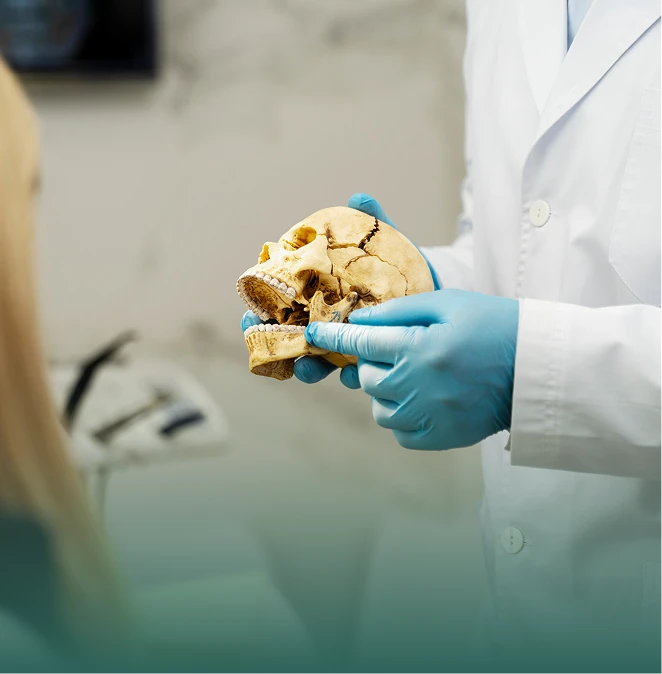
What Is TMJ/TMD?
Your temporomandibular joints sit just in front of your ears, connecting your jaw to your skull.
They are among the most complex joints in your body, allowing you to speak, chew and move your mouth.
When these joints or the muscles around them become strained, inflamed or misaligned, the result is a cluster of conditions known collectively as TMJ/TMD. The discomfort can range from mild stiffness to significant pain that affects your quality of life.
Recognizing the Symptoms
TMJ/TMD doesn’t look the same for everyone. It helps to listen to what your body is telling you. Some of the most common signs include:
- Jaw pain or tenderness, especially when eating or talking.
- Clicking, popping or grating sounds when you open or close your mouth.
- Difficulty or discomfort when opening your mouth wide.
- Aching around your ears or a sense of fullness or ringing inside them.
- Frequent headaches, facial pain or neck and shoulder tension.
- Worn, chipped or sensitive teeth from clenching or grinding.
If any of these resonate with you, it’s worth having a conversation with a provider who understands the intricacies of the jaw and its connection to overall health.
Why Does TMJ/
TMD Develop?
Understanding what’s driving your discomfort is the first step toward true relief. TMJ/TMD seldom stems from a single cause; it usually reflects a blend of pressures on the jaw joints and surrounding tissues.
These may include chronic grinding or clenching (often related to stress), misaligned teeth or bite, narrow palates, injuries to the jaw, arthritis, posture issues and even airway concerns that affect how you breathe at night.
Our Approach to TMJ/TMD Relief
We believe treatment should be as gentle and individualized as you are. At your initial visit, we’ll listen to your story, assess your jaw joints, muscles and bite, and talk about your health history. From there, we’ll discuss a range of options that may include:
Self-Care Strategies
Simple changes can make a big difference. We’ll share techniques to rest your jaw, adopt a soft-food diet when needed and apply heat or cold to ease aching muscles.
Stress And Airway Management
We may explore how breathing, sleep and tension patterns affect your jaw comfort and overall function.
Orthodontic Solutions
When appropriate, orthodontic treatment may help address bite imbalance and support healthier jaw mechanics.
Muscle Therapy And Innovative Modalities
Targeted therapies and modern treatment options can help calm overworked muscles and support more comfortable movement.
Custom Oral Appliances
Custom appliances may help reduce strain, protect teeth from clenching and create a more stable bite relationship.
Throughout your care, we offer sedation and anxiety support so you can relax and feel safe during any procedures. There’s never pressure to choose a path before you’re ready. We’re here to guide and empower you at your own pace.
Our Approach to TMJ/TMD Relief
We believe treatment should be as gentle and individualized as you are. At your initial visit, we’ll listen to your story, assess your jaw joints, muscles and bite, and talk about your health history. From there, we’ll discuss a range of options that may include:
Self-Care Strategies
Simple changes can make a big difference. We’ll share techniques to rest your jaw, adopt a soft-food diet when needed and apply heat or cold to ease aching muscles.
Stress And Airway Management
We may explore how breathing, sleep and tension patterns affect your jaw comfort and overall function.
Orthodontic Solutions
When appropriate, orthodontic treatment may help address bite imbalance and support healthier jaw mechanics.
Muscle Therapy And Innovative Modalities
Targeted therapies and modern treatment options can help calm overworked muscles and support more comfortable movement.
Custom Oral Appliances
Custom appliances may help reduce strain, protect teeth from clenching and create a more stable bite relationship.
Strategies
Airway
Management
Solutions
Therapy And
Innovative
Modalities
Appliances
Throughout your care, we offer sedation and anxiety support so you can relax and feel safe during any procedures. There’s never pressure to choose a path before you’re ready. We’re here to guide and empower you at your own pace.
Why Choose Encino Gentle Dental for TMJ/TMD Care?
Choosing where to seek TMJ/TMD care matters. Here are some reasons to choose Encino Gentle Dental
For patients whose jaw pain makes dental treatment itself difficult to face, sedation options are part of what we offer.- Built specifically for patients who feel uneasy or anxious in the dental chair
- Led by Dr. Elizabeth Wolfe, whose care combines clinical precision with lived understanding of dental anxiety
- Grounded in emotional safety, unhurried care, and a calm, supportive environment
- Treats TMJ/TMD through a whole-body lens, connecting oral health with the nervous system, airway, and overall well-being
- Supported by a warm, attentive team that creates space for healing rather than rushing
- Committed to high-quality, biocompatible materials and continuous education to ensure care is both gentle and effective
Questions We Are Asked About Jaw Pain
Will a night guard fix this?
Sometimes it helps a great deal, and sometimes it treats the wrong thing. A guard protects teeth from the force of clenching and can ease muscle strain, but it does not address why the clenching is happening. If the driver is stress, or how you are breathing at night, or a bite that does not meet evenly, a guard on its own tends to manage the symptom rather than settle it. That is why the first appointment is spent working out the cause rather than taking an impression.
How long before I feel better?
It varies more than anyone would like. Muscle-driven pain often eases within a few weeks once the joint is unloaded and the habits around it change. Problems inside the joint itself, or ones that have been building for years, take longer, and some improve a great deal without ever resolving completely. Anyone who offers you a timeline before examining you is guessing.
Do I need a scan or an MRI?
Usually not to begin with. Most jaw joint problems are assessed by history and examination — where it hurts, what you can and cannot do, how the joint moves and what it sounds like. Imaging earns its place when the findings point to something structural inside the joint, or when treatment has not worked the way it should, rather than as a routine first step.
Can TMJ/TMD go away on its own?
Often, yes, and that is worth knowing because it shapes what you should agree to. A large share of jaw problems settle with time, rest and small changes in daily habits. That is also the reason to be careful about anything irreversible — permanently reshaping teeth, for instance — early on, when a reversible approach has not yet been given a fair trial.
Should I be seeing a dentist or a doctor for jaw pain?
Either can be a sensible starting point, and neither owns the whole problem. Pain clearly tied to your teeth, your bite or clenching sits naturally with a dentist. Pain that arrives alongside headaches, neck problems, ear symptoms or an autoimmune condition often needs a physician involved as well. If what we find points somewhere other than the mouth, you get a referral rather than a treatment plan.
Is my jaw pain connected to how I sleep?
It can be. Jaw tension, nighttime clenching and disrupted breathing during sleep turn up together in the same people often enough to be worth asking about. The direction of that relationship is still being worked out, and clenching on its own is not evidence of an airway problem — but it is a good reason to ask about your sleep rather than fit a guard and move on.
What can I do tonight?
Soft food, no chewing gum, and avoid opening wide — including yawning, if you can catch it. Moist heat on the muscles for fifteen minutes helps most people more than ice. Then check where your teeth are right now: the resting position is lips together, teeth slightly apart, and most people who clench are surprised how much of the day their teeth are actually touching. If your jaw has locked and you cannot open or close properly, call rather than wait it out.
Take the First Step Toward Relief
You don’t have to live with jaw pain or uncertainty.
Whether you’re just starting to explore TMJ/TMD solutions or have tried treatments before, we invite you to reach out. A no‑pressure consultation can help you understand what’s happening and what options may suit your needs. When you’re ready, we’ll be here to listen, answer your questions and support you on your journey to comfort and health.