Q: When should my child first visit the dentist?
A: The American Academy of Pediatric Dentistry recommends scheduling a child’s first dental visit by their first birthday or within six months of the first tooth erupting.
Q: How often should children have dental checkups?
A: Most children benefit from dental visits every six months to monitor growth, prevent cavities, and maintain healthy oral development.
Q: Do you monitor airway development?
A: Yes. Dr. Wolfe evaluates airway development, breathing patterns, jaw growth, and other factors that may influence your child’s oral health and overall wellbeing.
Q: What if my child is nervous about visiting the dentist?
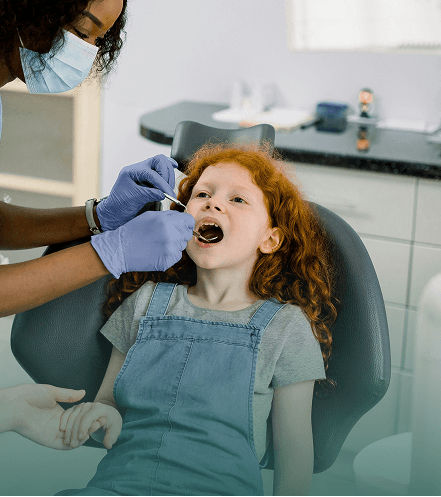
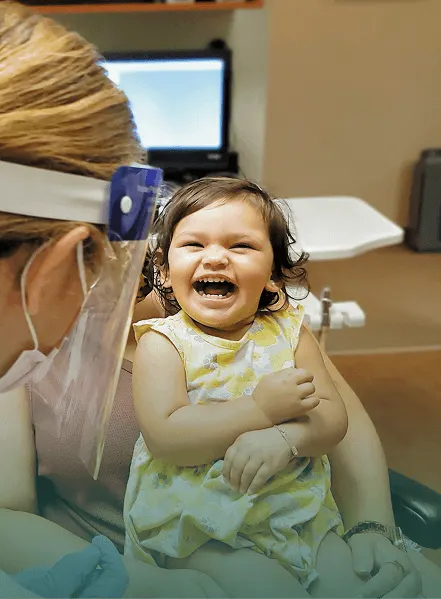
A: Our team takes a gentle, patient-centered approach to help children feel comfortable. We focus on building trust, creating positive experiences, and helping every child develop confidence during dental visits.
Q: Do baby teeth with cavities really need filling if they fall out anyway?
A: Usually yes, and the reason is not the tooth itself. Baby molars are not lost until around ten to twelve years old, so a cavity at four has years in which to reach the nerve. Decay causes pain and infection, and those teeth hold the space for the adult tooth coming in behind them. There is also the part nobody counts: a child who has been through a painful abscess at four is a far harder patient at eight. Some very late baby teeth are a fair exception, and that is a conversation rather than a rule.
Q: Are dental X-rays safe for children?
A: The dose from a digital dental X-ray is very small. The more useful question is whether the picture will change what we do. Decay between teeth that touch is invisible to the eye until it is already large, so radiographs are taken when the contacts have closed or when there is a reason to suspect a problem — not on a schedule regardless of need.
Q: My child grinds their teeth at night. Should I worry?
A: Grinding is common in children and often passes without any treatment. It is still worth mentioning, because grinding and disrupted breathing during sleep show up together in the same children often enough to be worth asking about. The direction of that relationship is still being worked out and grinding on its own is not proof of an airway problem — but it is a reason to ask about the rest of the night: snoring, mouth breathing, restlessness, and how they wake up.
Q: Are thumb sucking and mouth breathing actually a problem?
A: Both can be, and both are worth watching rather than panicking about. Thumb sucking that carries on past about age four, once the adult teeth are on their way, can change how the front teeth and the palate develop. Habitual mouth breathing matters because the tongue then rests low, the palate tends to narrow, and the face grows around the habit. Neither is an emergency. Both are easier to influence while a child is still growing, which is the whole argument for noticing early.