You went to bed at eleven. You woke at seven. Eight hours, by the clock, and yet you feel as though you fought your way through the night. By mid-morning you are reaching for a second coffee, and by three you would happily put your head on the desk. If you have been told this is stress, or your age, or just what having a job feels like, it is worth considering another explanation: you may have slept for eight hours without ever getting eight hours of sleep.
Hours in bed are not the same as sleep
Restorative sleep depends on moving through cycles of light, deep and REM sleep without being pulled out of them. When something interrupts that progression repeatedly, the total hours stay the same while the quality collapses. You never descend far enough, or stay down long enough, for the night to do its work.
The most common cause of that interruption in adults is the airway. In obstructive sleep apnea, the soft tissues at the back of the throat relax during sleep and narrow or close the airway. Breathing becomes shallow or stops altogether for seconds at a time, oxygen levels dip, and the brain briefly rouses you enough to reopen the airway and resume breathing. Then the cycle repeats. This can happen dozens of times an hour, and most people have no memory of any of it. What they remember is waking up tired.
The signs are wider than snoring
Snoring is the sign everyone knows, and on its own it is often just snoring. It becomes worth investigating when it arrives in company. Consider whether any of these also sound familiar:
Waking unrefreshed regardless of how long you were in bed. Morning headaches that fade as the day goes on. Waking suddenly, or gasping, or being told by someone else that you stop breathing. Getting up to use the bathroom more than once a night. Brain fog, irritability or concentration that has been quietly declining for a year or two. Blood pressure that has not responded well to treatment. Grinding or clenching your teeth at night.
None of these confirms anything by itself. Two or three of them together is a pattern, and a pattern is worth a question.
Why a dentist may be the first to notice
This is the part that surprises people. A dentist looks inside your mouth twice a year, often more consistently than any other clinician sees any part of you, and a struggling airway tends to leave marks there.
Flattened, worn back teeth suggest heavy nighttime grinding. A narrow upper arch means less room for the tongue, which has to go somewhere when you lie down. Scalloped edges along the sides of the tongue come from pressing it against the teeth all night. Redness at the back of the throat and a dry mouth on waking are the signature of breathing through an open mouth for eight hours. A lower jaw set back, or a small chin, changes the geometry of the space behind the tongue.
Grinding deserves a note of its own, because the relationship is genuinely interesting and often overstated. Nighttime grinding and sleep-disordered breathing are frequently found in the same patients, and there is research exploring whether one influences the other — but the direction of that relationship is not settled, and grinding is not proof of an airway problem. What it is, reasonably, is a reason to ask about your sleep rather than simply fitting you with a night guard and moving on.
What a dentist can and cannot do
This boundary matters, and any dental practice that blurs it is doing you a disservice.
Dentists screen. Physicians diagnose. A dentist can recognize the signs, ask the right questions, and arrange for a sleep test — but sleep apnea is a medical diagnosis, and it is made by a board-certified sleep physician who reviews and interprets your data. A dentist who tells you that you have sleep apnea has skipped a step that exists for good reasons.
Where dentistry contributes is afterwards, in collaboration with that physician, and only for the patients it suits.
What testing actually involves
The image most people carry is an overnight laboratory with wires taped to their scalp, and that expectation is a large part of why so much sleep apnea goes untested. For many adults it is no longer necessary. A home sleep test uses a small device you wear overnight in your own bed, recording your breathing and blood oxygen through a normal night rather than an unfamiliar one. The recording then goes to a sleep physician, who interprets it and discusses the findings with you.
Severity is described using the number of breathing interruptions per hour of sleep — roughly, five to fifteen is considered mild, fifteen to thirty moderate, and above thirty severe. That number matters, because it drives what happens next.
If the test finds something
For moderate to severe obstructive sleep apnea, positive airway pressure — CPAP — is usually the first-line treatment, and when it is used consistently it is the most effective option available. Nothing a dentist offers replaces it where a physician has determined it is what you need.
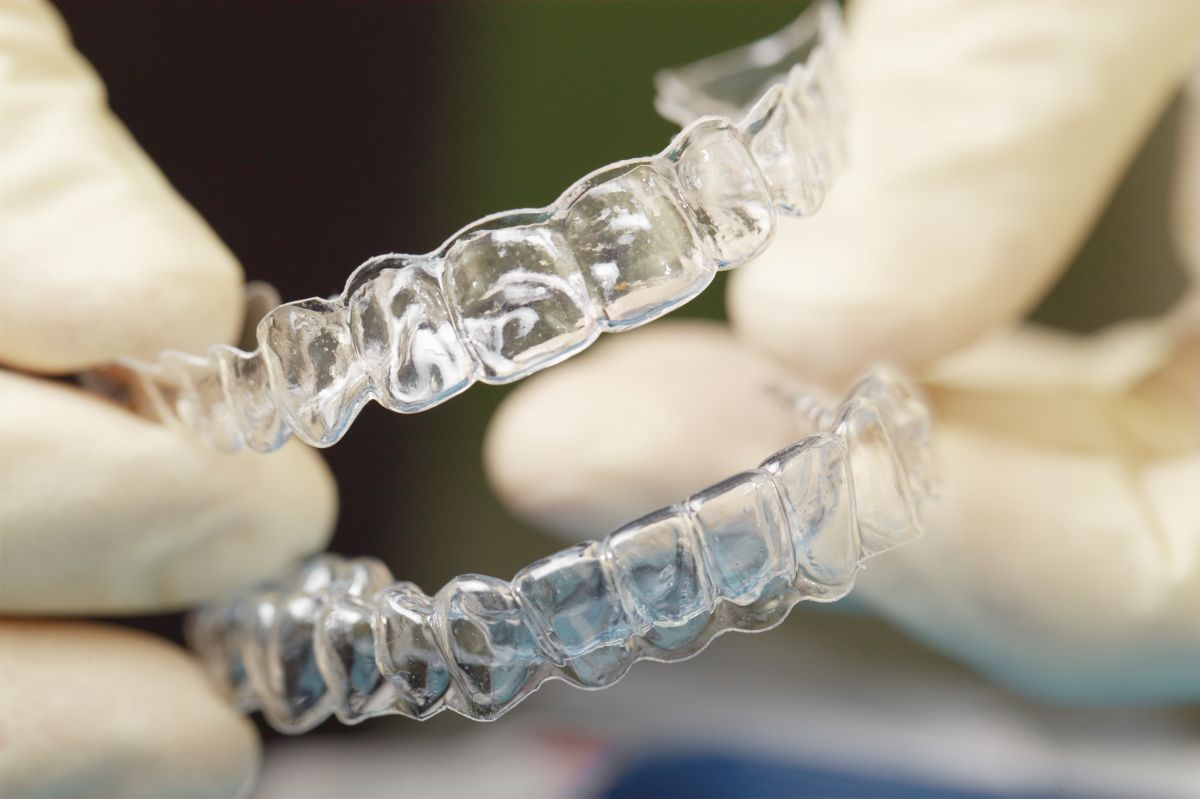
A custom oral appliance is a different tool for a different situation. Worn at night, it holds the lower jaw and tongue slightly forward so the airway stays open while the muscles relax. It is generally considered for mild to moderate cases, and for people who genuinely cannot tolerate CPAP — where the honest comparison is not an appliance against a machine, but an appliance against nothing at all. It is smaller, quieter and easier to travel with, and for the right patient that difference is the difference between a treatment used every night and one abandoned in a closet.
Which of these is appropriate is decided with your physician, not instead of them. An appliance also is not right for everyone: some dental conditions, too few healthy teeth to anchor it, and certain jaw joint problems rule it out. That is what an evaluation is for.
Why it is worth chasing down
Untreated obstructive sleep apnea is associated in research with high blood pressure, cardiovascular disease, type 2 diabetes and a raised risk of motor vehicle accidents from daytime sleepiness. Association is not the same as causation for any one person, and none of it is a reason to panic — but it is a reason not to spend another five years assuming that permanent exhaustion is simply your personality.
The more immediate argument is smaller and more human. People who get their airway treated tend to describe the result not as better sleep but as getting a version of themselves back — the one with patience, and focus, and the capacity to be interested in things after seven in the evening.
Where to start
Mention it at your next dental visit, even if you came in for a cleaning. Say that you wake up tired, or that you have been told you snore, or that you grind your teeth. It takes one sentence, and it is the question that opens the rest of it.
At Encino Gentle Dental, Dr. Elizabeth Wolfe works in airway health alongside general and cosmetic dentistry, screens for the signs described above, and coordinates with sleep physicians for testing and diagnosis. If any of this sounds like your last few years, call the office at (818) 788-1231 or ask about it at your next appointment.
This article is general information about sleep and breathing and is not a diagnosis or medical advice. Obstructive sleep apnea is diagnosed by a physician. If you think you may have it, speak with your doctor or ask us to help arrange testing.