A search for a dental crown near you will turn up dozens of practices in the San Fernando Valley, and most of them look similar on the surface. The difference between an average crown and a great one usually comes down to a handful of details that are easy to miss when you are just comparing websites.
If you are researching where to go for a crown in Encino, Sherman Oaks, Studio City, or the surrounding area, here is what actually separates one dentist from another: the material they choose, whether they check your bite after placement, how they handle anxious patients, and how they respond if something feels off afterward.
The short answer: look for a dentist who explains their material choice for your specific tooth, checks your bite before you leave, and treats a follow-up adjustment as a normal part of care rather than an inconvenience. A specialist background is less important than a dentist who is transparent about their process.
Ask what material they use for a dental crown and why
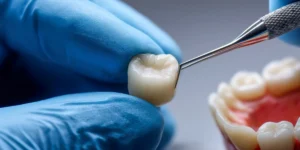
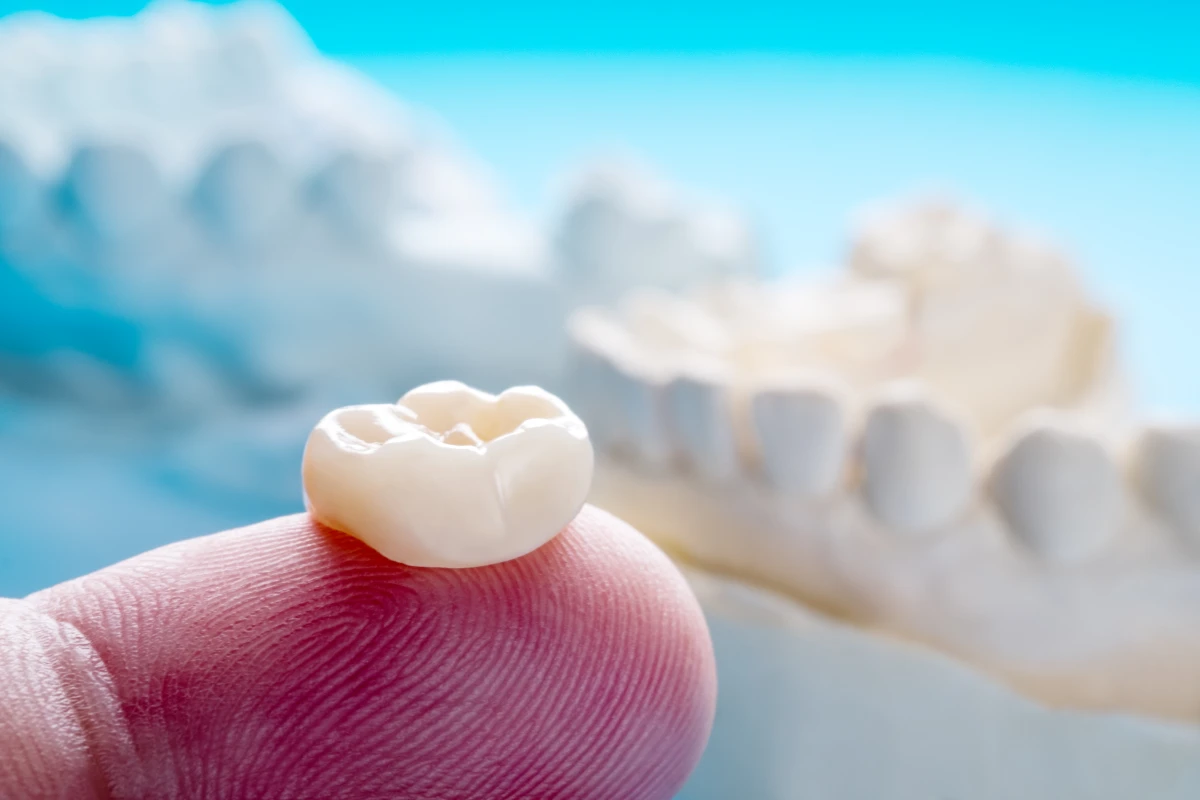
A dentist should be able to explain, in plain terms, why they are recommending a specific dental crown material for your specific tooth. Crowns are not one product. Some dentists default to whatever their lab supplies most cheaply. Others select the material based on the tooth. A molar that takes heavy bite force needs different strength characteristics than a front tooth where appearance matters more. Dr. Wolfe uses all-ceramic materials for their combination of strength, biocompatibility, and a natural appearance, and adjusts the specific material to the tooth being restored. If you want to understand the tradeoffs between materials in more depth, this comparison of ceramic and porcelain crowns breaks down the differences in strength, aesthetics, and longevity. If a practice cannot explain why they chose a particular material for your case, that is worth asking about further.
Ask whether the crown is made in-house or sent to an outside lab
Both approaches to a dental crown can produce excellent results, but they affect your timeline and how many appointments you need. Same-day, in-office crown systems use a digital scanner and an on-site milling unit to design and produce the crown during a single visit, which eliminates the temporary crown step entirely. Sending the case to an outside dental lab typically means a temporary crown for one to two weeks while the permanent one is fabricated, but it also allows for a wider range of materials and more detailed shade matching by a dental technician. Dr. Wolfe uses all-ceramic materials, described in more detail on our ceramic crown page, and can walk you through which approach fits your case. For a full look at what each visit involves either way, here is a step-by-step breakdown of the crown procedure. Neither approach is automatically better. What matters is that the dentist explains which one they use and why it fits your situation.
Ask how they check your bite afterward
A crown that looks perfect on the model can still sit slightly high or low once it is in your mouth. Left unadjusted, this throws off how your jaw closes and can lead to soreness, headaches, or strain on the opposite side. A dentist who takes bite balance seriously will check and recheck your bite at placement using articulating paper or a digital bite scan, not just fit the crown and send you home. This is one of the most overlooked factors in whether a crown feels right long after the appointment, and it is also connected to TMJ health. A crown that sits even slightly off can contribute to jaw strain over time, so a dentist who is attentive to bite alignment is also protecting the joint, not just the tooth.
Ask how they handle dental anxiety
Choosing a crown dentist is not only about materials and technique. For many patients, the bigger question is whether the office will actually listen if they are anxious about the procedure. A practice built around calm, unhurried care makes a real difference in whether you follow through with treatment or keep putting it off. If dental anxiety has kept you from booking, it is worth finding a dentist who is specifically experienced with anxious patients rather than hoping a general practice will accommodate you.
Ask what happens if something feels off
Even a well-placed crown can need a small adjustment in the first week or two. What matters is whether the practice treats that as a normal part of the process or makes you feel like you are being difficult for asking. A practice that welcomes a follow-up visit for bite or comfort issues is signaling that they care about the outcome, not just the appointment.
Same-day dental crown availability matters more than it seems
If you already know you need a crown, whether from a cracked tooth, a large cavity, or a dentist’s recommendation, waiting weeks for an opening can mean living with pain or a compromised tooth longer than necessary. This matters even more if the reason you are searching is urgent. If a crown has already come loose or fallen out, here is what to do in the meantime while you get seen. Ask directly whether same-day or near-term appointments are available. Practices that plan for this tend to have more flexible scheduling built in.
Signs of a thorough crown dentist versus a rushed one
| A thorough approach | A rushed approach |
|---|---|
| Explains material choice for your specific tooth | Uses the same material for every case regardless of location |
| Checks and adjusts your bite at placement | Fits the crown and ends the appointment without a bite check |
| Welcomes a follow-up visit if something feels off | Treats adjustment requests as an inconvenience |
| Asks about anxiety or discomfort before starting | Moves directly into the procedure without checking in |
| Gives you a clear reason a crown is needed over a filling | Recommends a crown without explaining the clinical reasoning |
Frequently asked questions about dental crowns
How long does it take to get a dental crown?
It depends on whether the crown is made in-house or sent to an outside lab. A same-day, in-office crown can be designed, milled, and placed in a single visit. A lab-fabricated crown typically takes one to two visits over one to two weeks, with a temporary crown in place in between.
Is a same-day crown as good as one made by an outside lab?
Both can produce a durable, well-fitting result. Same-day crowns are milled from a solid ceramic block and are a strong option for many back teeth. Lab-made crowns allow for more detailed layering and shade work, which can matter more for front teeth where appearance is a bigger factor. The right choice depends on which tooth is being restored.
How much does a dental crown cost?
Cost varies based on the material used, the location of the tooth, and whether dental insurance applies. Rather than relying on a general number, the most accurate way to know your cost is a personalized estimate during a consultation, since it depends on your specific tooth and treatment plan. It is also worth asking whether they take your insurance and how they handle the claim.
Do I need a specialist for a dental crown, or can a general dentist do it?
Most dental crowns are placed by general dentists, not specialists. What matters more than the title on the door is the dentist’s process: how they select materials, whether they check your bite, and how they handle any needed adjustments afterward.
What should I do if my new crown feels off?
Contact the practice and describe what feels wrong, whether that is a high spot when you bite down, ongoing sensitivity, or a general sense that something is not right. A minor bite adjustment is a normal and quick part of the process, and a practice that welcomes this feedback is doing its job correctly.
What this looks like at our Encino practice
Dr. Wolfe treats patients from Encino, Sherman Oaks, Studio City, Calabasas, and Tarzana, and every crown placement includes a full bite check, biocompatible ceramic materials, and the option to slow down the process for anxious patients. If you are not sure whether your tooth needs a crown at all, this guide to the most common signs is a good place to start, and if the tooth in question already had a root canal, here is why that specifically calls for a crown. If you already know a crown is next, our crown page covers what to expect from the first visit through placement.
The right dentist for a crown is rarely the one with the most convenient location. It is the one who explains their reasoning, checks their work, and treats your comfort as part of the outcome, not an afterthought.